What You See on the Bosphorus: 10 Landmarks from the Water
Published: · Bosphorus Glow
In short
From the water you see the Ottoman palaces of Dolmabahçe, Çırağan and Beylerbeyi, the Ortaköy Mosque, the fortresses of Rumeli and Anadolu facing each other at the narrowest point, the Maiden’s Tower, and the suspension bridges that join Europe and Asia.
Before you look: how the strait is laid out
The Bosphorus runs roughly north to south. Sailing north from the old city, Europe is on your left and Asia on your right. The grand palaces are mostly on the European side near the southern end; the two fortresses stand further north, where the strait narrows to about 700 metres.
Which of these landmarks you pass depends on the route and length of your cruise. Ask us before you book if there is one you especially want to see.
On the European shore
These are the sights most visitors recognise first.
- Topkapı Palace: on the headland where the Bosphorus meets the Golden Horn. It was the home of the Ottoman sultans for nearly 400 years.
- Dolmabahçe Palace: built in the mid-19th century for Sultan Abdülmecid I, with a long white façade directly on the water. Atatürk, the founder of the Turkish Republic, died here on 10 November 1938.
- Çırağan Palace: completed in 1867, gutted by fire in 1910 and later restored. Today it is a hotel.
- Ortaköy Mosque: officially the Büyük Mecidiye Mosque, finished in the mid-1850s for Sultan Abdülmecid I. It stands right at the water’s edge, with the first Bosphorus bridge behind it.
- Rumeli Fortress: built by Sultan Mehmed II in 1452, the year before the conquest of Constantinople, at the narrowest point of the strait.
On the Asian shore
The Asian side is quieter and greener, with palaces, towers and wooden waterfront mansions called yalı.
- Maiden’s Tower: a small tower on an islet off Üsküdar, near the southern entrance of the strait. A tower has stood here since the 12th century; the present stone structure dates from the 18th century.
- Beylerbeyi Palace: built between 1861 and 1865 for Sultan Abdülaziz as a summer residence and a place to host visiting heads of state.
- Anadolu Fortress: built in 1393–1394 for Sultan Bayezid I. It faces Rumeli Fortress across the water; together the two controlled ships passing through the strait in 1453.
The bridges between two continents
Three suspension bridges cross the Bosphorus. The first, now called the 15 July Martyrs Bridge, opened in 1973. The Fatih Sultan Mehmet Bridge followed in 1988, close to the two fortresses. The third, the Yavuz Sultan Selim Bridge, opened in 2016 near the Black Sea end of the strait.
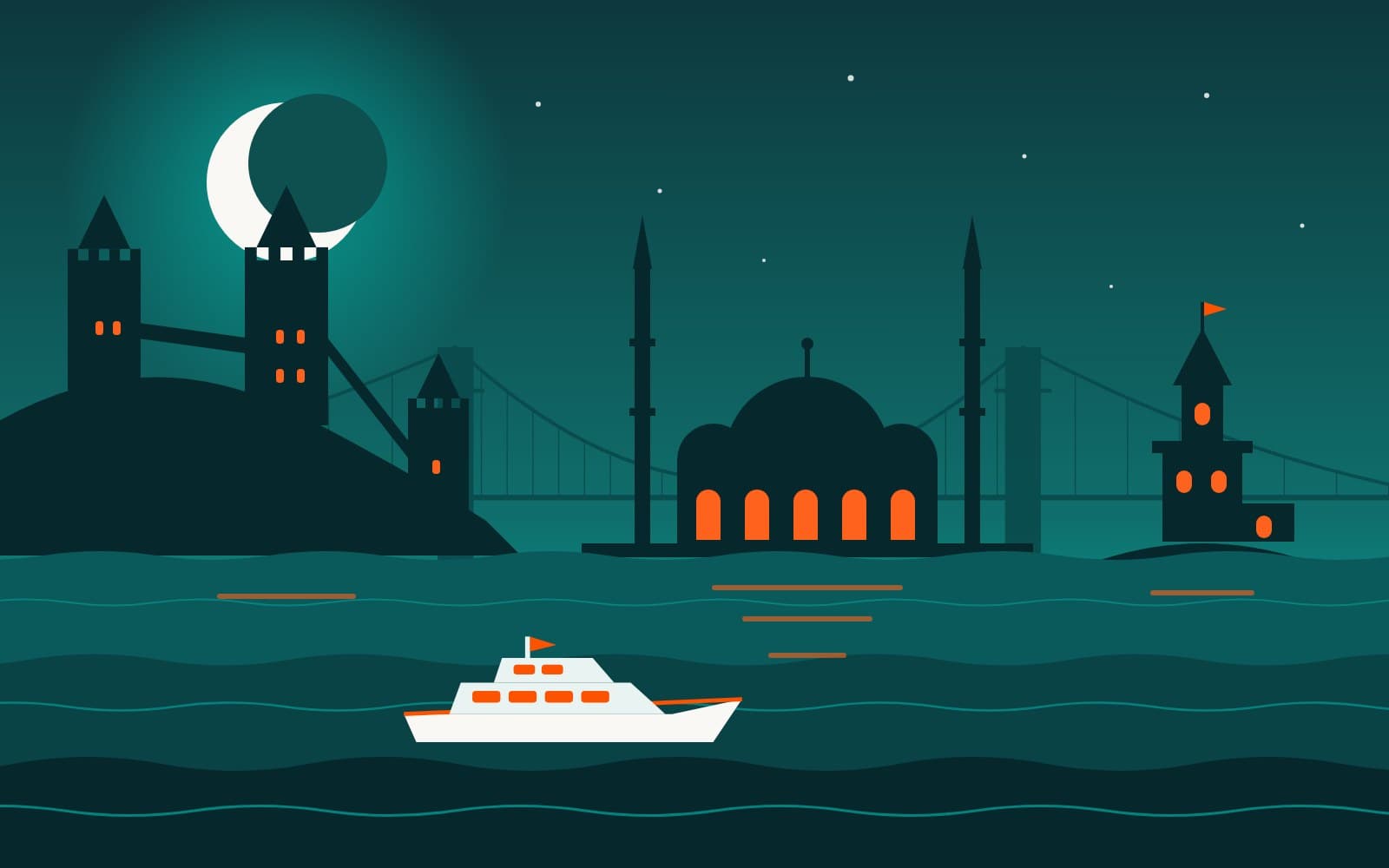
After dark the bridges are lit, which is one reason an evening on the water looks so different from a daytime tour.
See the night cruiseSeeing them with commentary
Landmarks are easier to enjoy when someone tells you what you are passing. Our daytime tours from Eminönü include guided commentary on board in English and Russian.
See the daytime toursQuestions and answers
How many bridges cross the Bosphorus?
Three: the 15 July Martyrs Bridge (1973), the Fatih Sultan Mehmet Bridge (1988) and the Yavuz Sultan Selim Bridge (2016).
Where is the narrowest point of the Bosphorus?
Between Rumeli Fortress on the European shore and Anadolu Fortress on the Asian shore, where the strait is about 700 metres wide.
Which landmarks are on the Asian side?
The Maiden’s Tower, Beylerbeyi Palace and Anadolu Fortress are the best known, along with many wooden waterfront mansions.
Which side of Istanbul is Dolmabahçe Palace on?
The European side, directly on the Bosphorus shore.
Is there commentary on board?
Our daytime tours include guided commentary on board in English and Russian.